It’s been good to know you

1743553_10202083770593323_473274625_n

I’d like to live in a world where Toys ‘R’ Us has a Pete Seeger action figure.

Because our kids need better role models.

This was an American who served in the Armed Forces and stared down McCarthyism.

This was an American who was blacklisted for his politics and then, in the middle of the Vietnam War, when finally allowed back on television, proceeded to sing “We’re waist-deep in the Big Muddy and the big fool says to push on.”

This was an American who saw what had become of the mighty Hudson River and proceeded to  head an organization that built a magnificent sloop, the Clearwater, which still travels up and down the river in a campaign to keep it clean.

This was an American who, in 1955, when summoned before the House Un-American Activities Committee, said:

“I feel that in my whole life I have never done anything of any conspiratorial nature…. I am not going to answer any questions as to my association, my philosophical or religious beliefs or my political beliefs, or how I voted in any election, or any of these private affairs. I think these are very improper questions for any American to be asked, especially under such compulsion as this.”

This was an American who was denied a chance to appear on a TV show called “Hootenanny,” because he refused to sign a loyalty oath.

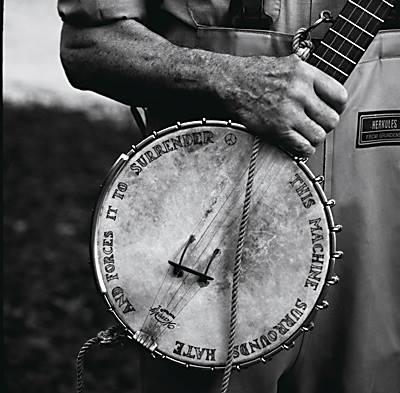
This was the American who wrote “How to Play the Five-String Banjo,” still the premier primer on the subject, and a book I plan to study closely when I take up the instrument. When I retire. If I live to be 94, as Pete did, I should have time to master it.

This was an American who sang and played with Woody Guthrie and Bruce Springsteen.

Where Have All the Flowers Gone? Turn, Turn, Turn, Goodnight Irene, If I Had a Hammer, So Long, It’s Been Good to Know You . . .

We Shall Overcome.

To everything, there is a season.

R.I.P., Pete. We need more like you.
Image

— 30 —

The worst New Year

Image

Journalists have to work on holidays, because cops and firefighters and doctors and nurses and EMTs and soldiers work on holidays, and someone has to report on what the heroes are up to while the rest of us are drinking ourselves silly.

And that’s why I always worked on Christmas. It’s not my holiday, so to do otherwise would be selfish.

But because I always worked Christmas, I always had off on New Year’s Eve. Quid pro quo, and all that.

Except for New Year’s Eve 2000, a night of work that still infuriates me, 14 years later. Continue reading

My first blackout

Image

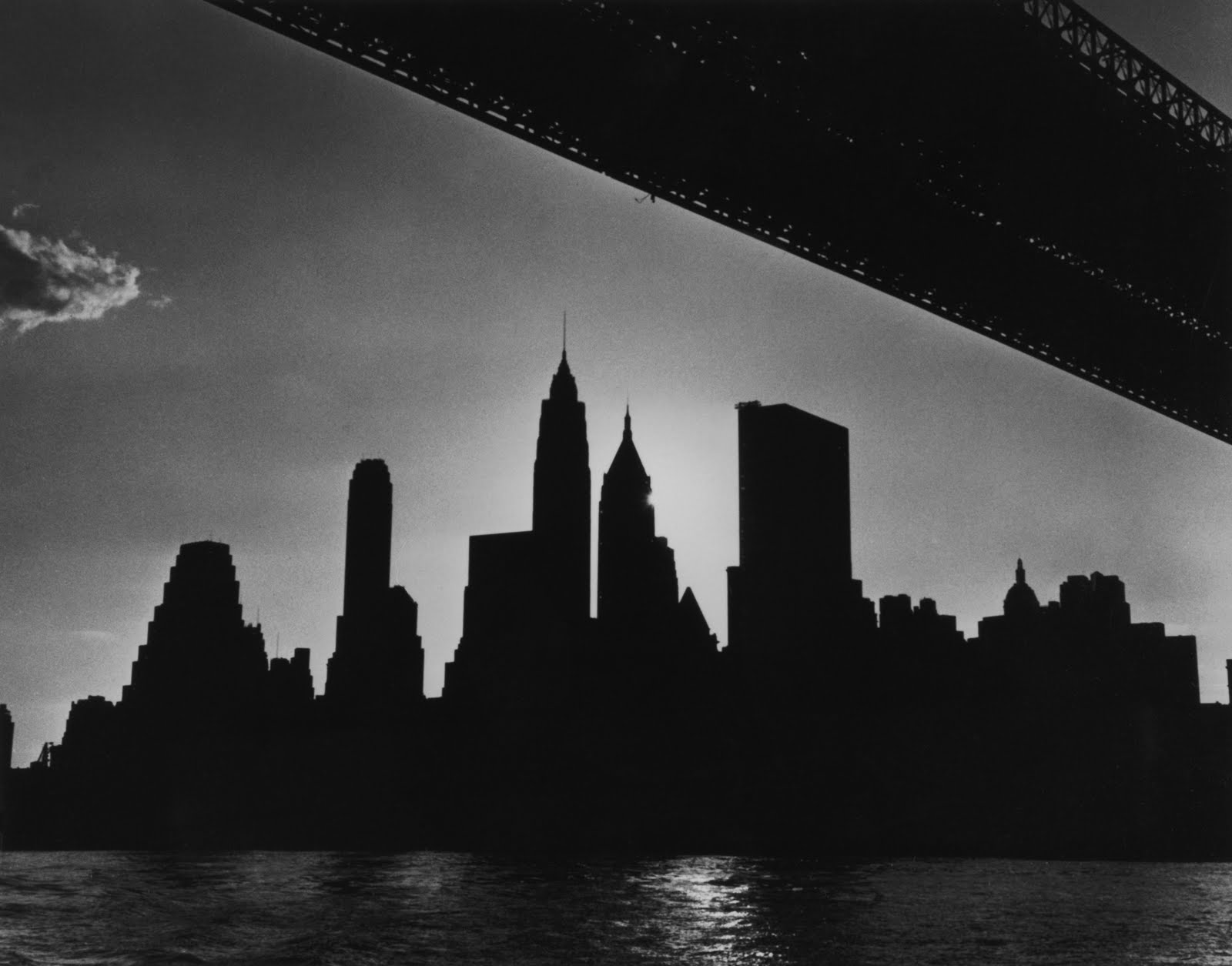
Today’s obituary in the New York Times for Stan Brooks, a legendary “Voice of New York,” gives prominent mention to the evening of November 9, 1965, when someone pulled the wrong switch and plunged most of the New York metropolitan area and a good portion of the American Northeast into immediate darkness. It was the Night of the Blackout, or would be until the night of July 13, 1977, when we had the Son of New York Blackout, which would be the end of all blackouts until August 14, 2003, when we had the Grandson of New York Blackout.

I’ve had the dubious pleasure of being in town for all three, and each one comes with a story.

So pull up a chair, kids, and I’ll tell you all about Blackout Number One, and how, if not for some unknown clown who these days would be called a bully, I would have been underground on the subway in Brooklyn, somewhere around DeKalb Avenue, when the lights went out, and how I was such a good citizen that my mom and dad had no idea where their 15-year-old kid was for roughly six hours. Continue reading

Thank you, Miss Mosey


My friend Ash recently posted on Facebook a Business Insider article about a college kid who got an 89.22% grade in his chemistry class and emailed his professor asking if maybe there was a way the prof could find an “extra” .78% somehow, somewhere, so that he could get an even 90% grade, which he said would “be a great boost in the GPA for me” and, let’s face it, would so obviously make the difference someday between slaving behind the counter at McDonald’s for the rest of his life and becoming the CEO of Dow Chemical.

The kid finished his email with “Thanks for a great semseter and good luck with medical research.”

Now, first of all, I would have lowered his grade for misspelling “semester.” But that’s just me.

And I digress. Continue reading

If Jesus was Jewish . . .

Now that we’re deep into the ridiculous, annual War on Christmas – you know, the one where we’re supposed to believe that America is waging a duel to the death with roughly three out of four members of its own population – a new wrinkle has been added:

What color is Santa Claus? Is he white? Is he black? Paisley?

And, for that matter, what about Jesus?

This kerfuffle got kerfuffling when a “culture blogger” named Aisha Harris, who is black, wrote a compelling piece in Slate about how, as a child, she “knew two different Santa Clauses.”

The first had a fat belly, rosy cheeks, a long white beard, and skin as pink as bubble gum. He was omnipresent, visiting my pre-school and the local mall, visible in all of my favorite Christmas specials.

Then there was the Santa in my family’s household, in the form of ornaments, cards, and holiday figurines. A near-carbon copy of the first one—big belly, rosy cheeks, long white beard: check, check, check. But his skin was as dark as mine.

Harris goes on to write:

Two decades later, America is less and less white, but a melanin-deficient Santa remains the default in commercials, mall casting calls, and movies. Isn’t it time that our image of Santa better serve all the children he delights each Christmas?

Yes, it is. And so I propose that America abandon Santa-as-fat-old-white-man and create a new symbol of Christmas cheer. From here on out, Santa Claus should be a penguin.

That’s right: a penguin.

Cue the outrage. Continue reading

Rest in peace, Mrs. B

Image

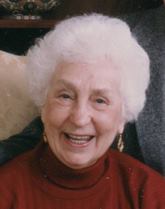
Ginnie’s mom died yesterday. She was a lovely woman who lived to be 94, and Ginnie posted on Facebook:

In tribute to my mom, Barbara Bacheler, who lived her 94 years with gusto, spreading light and love to everyone she came in contact with. She’s my hero. And this is her first appearance on Facebook, which would bemuse her!

I like to think that my memory of her would bemuse her, as well.

Pull up a chair, kids, and I’ll tell you all about the first time I met Ginnie’s mom, and how she so kindly served me my last breakfast at a kitchen table in the summer of 1971 before Hank and I headed off for the Canadian border in my 1970 Ford Maverick, color Thanks Vermillion, to begin our Kerouacian tour of America.

The day I met Ginnie’s mom began in Brooklyn, where I loaded my duffel bag full of clothes and my Gibson guitar and a brand-new, never-used two-man canvas tent, and a brand-new, never-used Coleman stove, and a brand-new, never-used Coleman lamp and a brand-new, never-used Coleman cooler — we were so experienced at this camping stuff — and drove to Queens to pick up Hank, who threw in his suitcase and our journey began. Continue reading

Working on Thanksgiving? Please stop whining

All this moaning and groaning and whining and kvetching about stores being open on Thanksgiving and what a terrible thing this is for America and how it’s proof that the terrorists have won is giving me a headache.

I’ve worked in newsrooms all my life. It’s a 24/7 business, and there’s no such thing as a “guaranteed” day off. When the pope died on a Saturday, I got into my car and hightailed it to Manhattan. Same when the space shuttle Columbia blew up. Same when Elian Gonzales was seized. When the war in Iraq started at 8:30 p.m., I turned around and went back to work. When Saddam Hussein was executed at 4 in the morning, I woke up and got to work. I sat in the stands at Yankee Stadium one October night and watched Reggie Jackson hit three home runs . . . and then, when the rest of New York was hoisting beers, I went to work. Continue reading

November 22, 1963 (Part III): A tip of the hat to Mr. Norregaard


Image

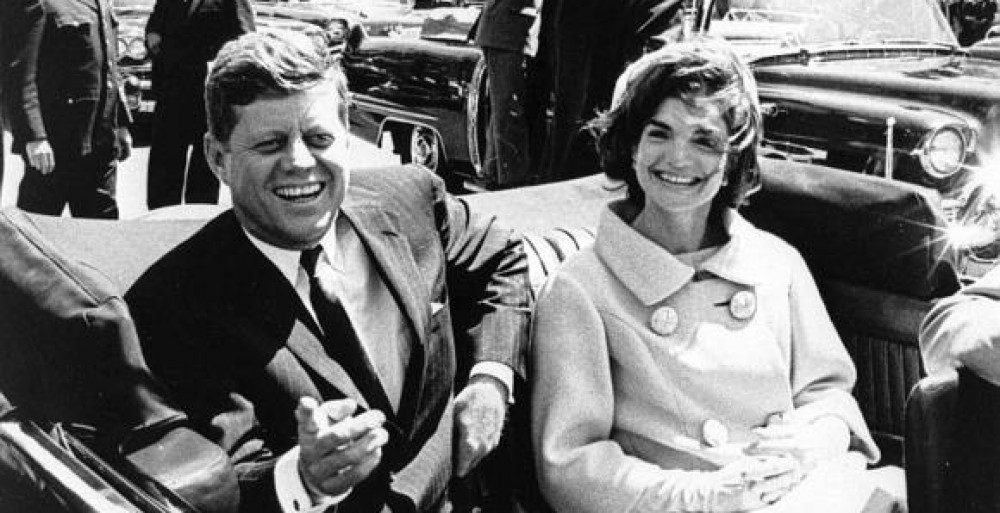
JFK was dead, Oswald was dead, and we carried on.

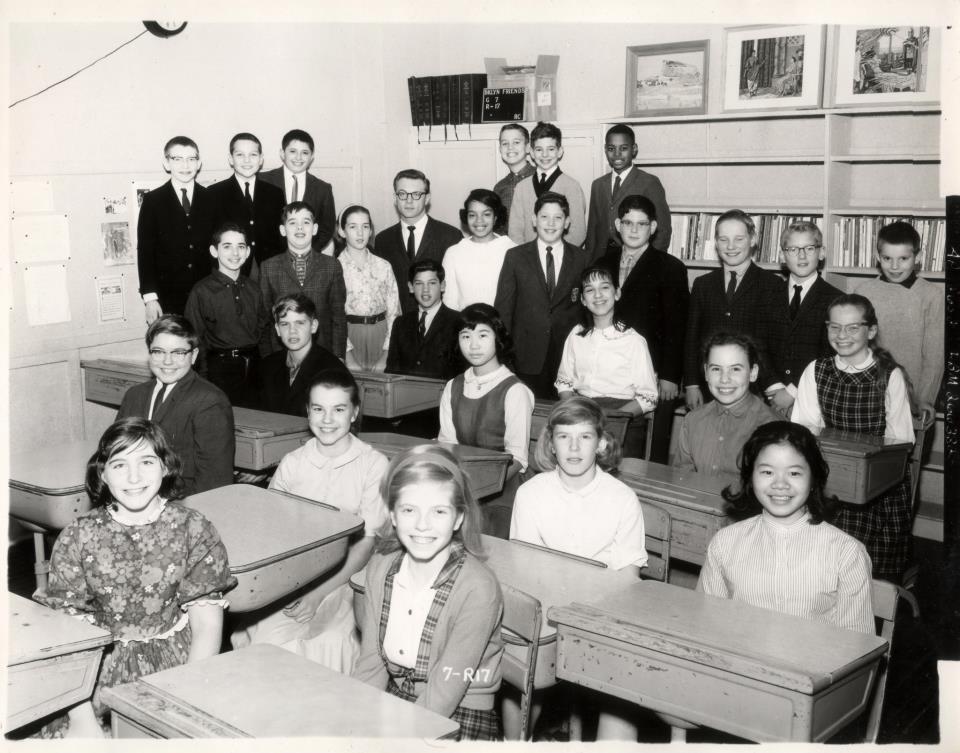
We went back to school, and one week later I had one of the most important moments of what would become my career. So pull up a seat, kids, and I’ll tell you all about Mr. Norregaard, the best teacher I ever had, and what happened when I violated one of his ironclad rules.

Martin Rudolph Norregaard taught English and Social Studies to 7th and 8th Graders at Brooklyn Friends School. He was likable and funny and no-nonsense. He expected excellence – demanded it, really – and made sure you knew he would settle for nothing less.

He taught us how to write. And not just how to put words on paper, but to labor over them and make sure you got them exactly the way you wanted them.

He taught us grammar and punctuation and usage. He taught us that sentences had structure, that they were a mathematical equation of sorts. And he taught us to diagram sentences, a lesson that is pretty much gone now, and not to anyone’s benefit. He taught us how to put on paper a visual display of how every word in a sentence related to the others. Nouns, verbs, adverbs, adjectives, conjunctions, prepositions . . . They all work together. Mr. Norregaard was a drill sergeant of diagramming, and if you were in the 7th or 8th Grade at BFS, you were going to learn it whether you liked it or not. Continue reading

November 22, 1963 (Part II)

cropped-jfk-assassination

Miss Bromley’s floor was swept and clean, the school week was over and it was time to go home, a daily trip that involved walking a couple of blocks to the corner of Livingston and Smith, where I caught the Flatbush Avenue bus to the corner of Flatbush and Farragut, where I transferred to the Ocean Avenue bus, which took me to Avenue N, around the corner from my home.

And the president of the United States was dead.

It was a long daily commute, and this being Brooklyn, the only daily constant was noise. But on this afternoon, the silence was deafening.

Streets normally filled with honking horns, buses normally jammed with yakking passengers and unruly school kids — everything was eerily silent. Five years later, when Martin Luther King and Robert Kennedy would be killed, you would hear cries for violence, and you would see faces that reflected shame and anger. Thirty-eight years later, on September 11, you would hear cries for revenge, and you would see faces that reflected fear and rage.

But on November 22, 1963, the only thing you heard was nothing, and the only face you saw was one of sorrow. You could break down and cry, or you could hold it in. Either way, you felt empty inside. And, even at 13, I knew for sure that the world would never be the same. You had Pearl Harbor, Dad. I had this. Continue reading

My first selfie

Image

It’s official. Selfie is the word of the year. But there were selfies long before there were cellphones.

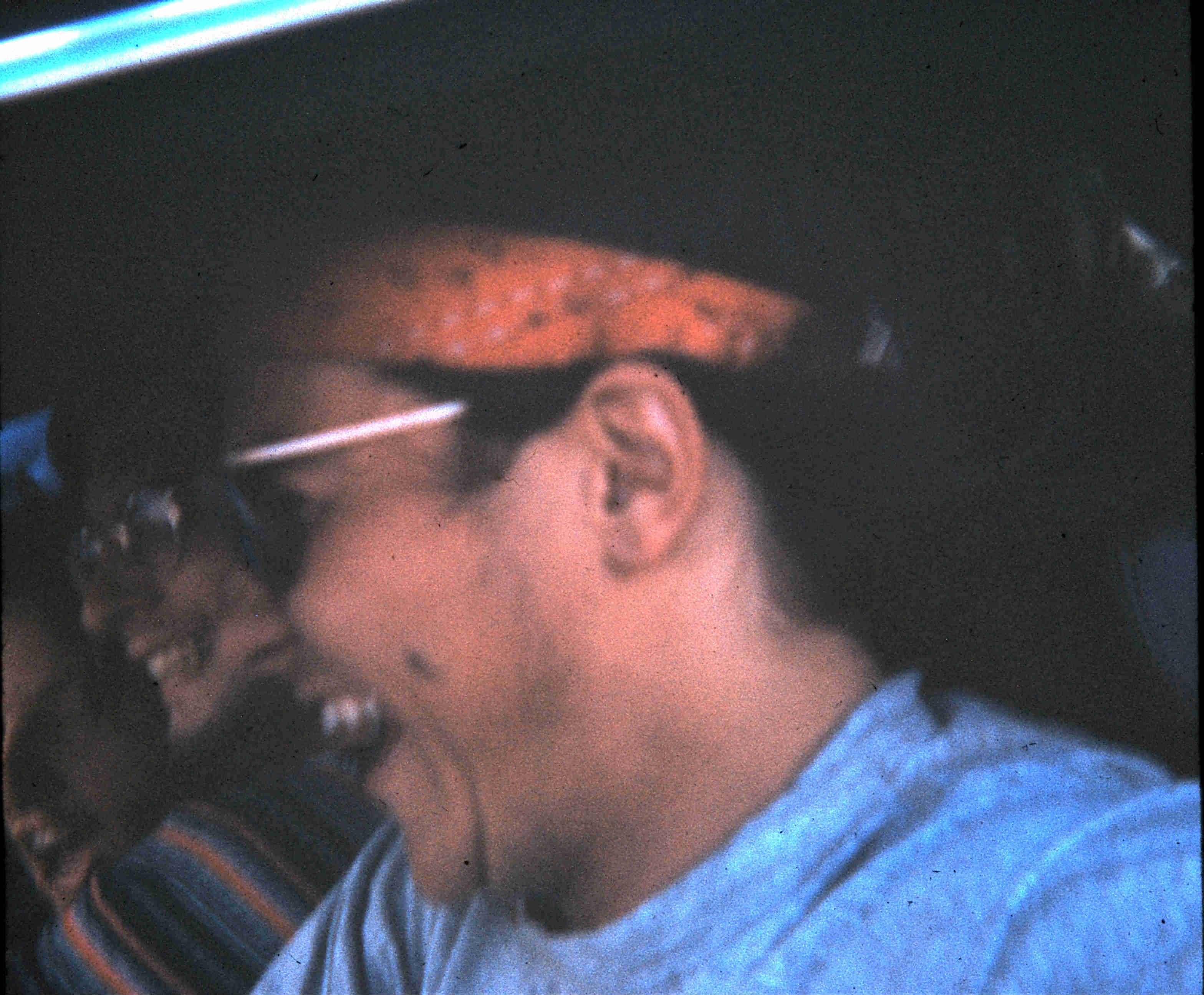
The one above may very well be my first, taken at about 65 miles per hour while cruising alongside Jenny Lake, in Grand Teton National Park, in Wyoming, as part of our Kerouacian tour of America in the summer of 1971.

The photo technique was totally professional. I stuck a Kodak Instamatic out the window at arm’s length, guessed the proper camera angle and masterfully took the shot, all while controlling the car with my right hand.

I have witnesses. That’s Mike to my right and Hank to his, piled into the front seat of the Ford Maverick, color Thanks Vermillion. Kenny and Jan are either behind us or, much more likely, ahead of us in the blue Cougar.

Hank reports that Jethro Tull was tuned up to 11 on the car stereo. Who am I to argue?

And you kids thought you invented selfies.

— 30 —