Rest in peace, Mrs. B

Image

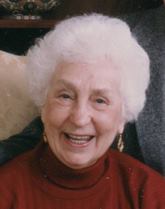
Ginnie’s mom died yesterday. She was a lovely woman who lived to be 94, and Ginnie posted on Facebook:

In tribute to my mom, Barbara Bacheler, who lived her 94 years with gusto, spreading light and love to everyone she came in contact with. She’s my hero. And this is her first appearance on Facebook, which would bemuse her!

I like to think that my memory of her would bemuse her, as well.

Pull up a chair, kids, and I’ll tell you all about the first time I met Ginnie’s mom, and how she so kindly served me my last breakfast at a kitchen table in the summer of 1971 before Hank and I headed off for the Canadian border in my 1970 Ford Maverick, color Thanks Vermillion, to begin our Kerouacian tour of America.

The day I met Ginnie’s mom began in Brooklyn, where I loaded my duffel bag full of clothes and my Gibson guitar and a brand-new, never-used two-man canvas tent, and a brand-new, never-used Coleman stove, and a brand-new, never-used Coleman lamp and a brand-new, never-used Coleman cooler — we were so experienced at this camping stuff — and drove to Queens to pick up Hank, who threw in his suitcase and our journey began. Continue reading

November 22, 1963 (Part II)

cropped-jfk-assassination

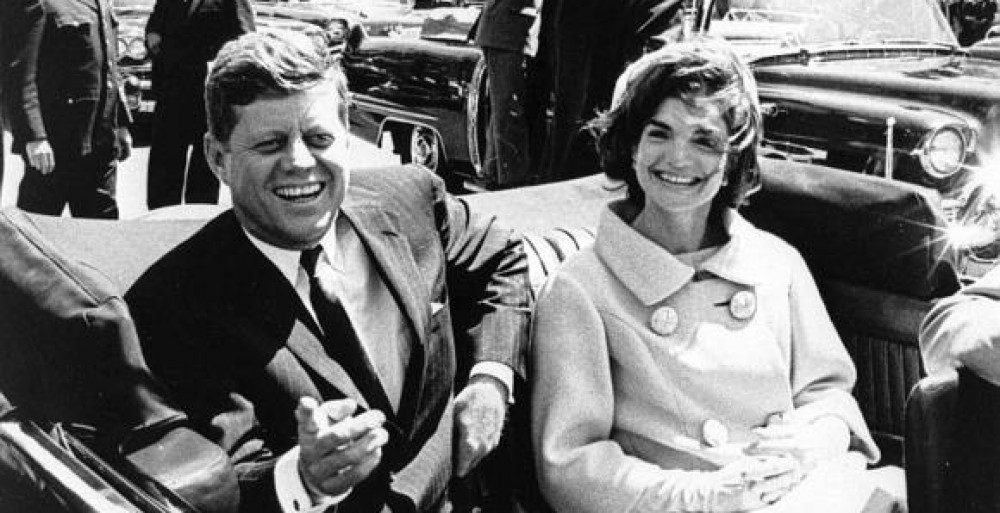
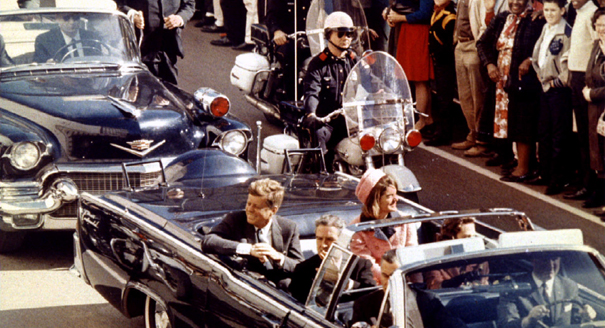
Miss Bromley’s floor was swept and clean, the school week was over and it was time to go home, a daily trip that involved walking a couple of blocks to the corner of Livingston and Smith, where I caught the Flatbush Avenue bus to the corner of Flatbush and Farragut, where I transferred to the Ocean Avenue bus, which took me to Avenue N, around the corner from my home.

And the president of the United States was dead.

It was a long daily commute, and this being Brooklyn, the only daily constant was noise. But on this afternoon, the silence was deafening.

Streets normally filled with honking horns, buses normally jammed with yakking passengers and unruly school kids — everything was eerily silent. Five years later, when Martin Luther King and Robert Kennedy would be killed, you would hear cries for violence, and you would see faces that reflected shame and anger. Thirty-eight years later, on September 11, you would hear cries for revenge, and you would see faces that reflected fear and rage.

But on November 22, 1963, the only thing you heard was nothing, and the only face you saw was one of sorrow. You could break down and cry, or you could hold it in. Either way, you felt empty inside. And, even at 13, I knew for sure that the world would never be the same. You had Pearl Harbor, Dad. I had this. Continue reading

November 22, 1963 (Part I)

Image

I was in Miss Bromley’s art class, which was simultaneously the best and worst 45 minutes of the school week. The best because it was the last period of the week, and the weekend began as soon as the bell rang. The worst because . . . well, because Miss Bromley. If there was a kid in the school who enjoyed the company of Miss Bromley, I’m still waiting for a hand to go up.

Miss Bromley had some sort of handicap. She dragged a leg while she walked, and we all enjoyed making fun of her because what’s the point of being 13 years old if you can’t act like an insensitive jerk? As I recall, Haynes and Ruby did the best Miss Bromley impression. The rest of us laughed. We all knew it was wrong and cruel, but hell . . . we were 13. And besides, it was Miss Bromley. Continue reading

Mazer and Maggie and why I flunked American History

Bill Mazer, The Amazin’, died last week at the age of 92.

Alberta Magzanian, the Toughest Teacher in the World, will be honored by her former colleagues and students somewhere in Maryland this weekend.

There is a connection.

Pull up a chair, kids, and I’ll tell you the story of how a radio sportscaster is the reason the Toughest Teacher in the World gave me an ‘F’ on my American History final in my senior year of high school. Continue reading

Cooperstown

Image

My kids have grown up. I know this because I’m banging away on a keyboard in Haverstraw, NY, right now, when I should be on the way home from Cooperstown.

Pull up a chair, kids, and I’ll tell you all about a grand tradition that began in October of 1987, when Josh was 8 and Ben was 2 and Josh and I decided to have a baseball weekend, just us guys, no mom, no baby brother.

The plan was simple:

We’d drive to Cooperstown on Friday night, when I got home from work, and check into a motel for a couple of nights. We’d spend all day Saturday at the Hall of Fame, then head to Brooks’ Diner in Oneonta for some chicken and ribs, and then return to our motel room to watch Game Six of the World Series. Just the two of us.

And there would be a brief but essential stop at a convenience store on the way back to motel from Brooks’, so we could pick up some essentials for watching the game. All involving excessive amounts of sugar and salt.

There was one ground rule: Anything goes. You want it, we’ll buy it. Chips, candy, soda, Twinkies, whatever. We’re guys. We snack till we’re sick.

The next morning, we’d have breakfast somewhere, then doughnuts at Snyder’s Bakery, and then we’d head back home, stopping en route to pick up a Halloween pumpkin or two.

Perfect. Continue reading

On my honor . . .

 Repeat after me . . .

On my honor I will do my best
To do my duty to God and my country
And to obey the Scout Law;
To help other people at all times;
To keep myself physically strong,
Mentally awake, and morally straight.

That, kids, is the Scout Oath, the words that every Boy Scout recites with two or three fingers pressed against his forehead.

The “morally straight” part almost got settled this year when the Scouts finally ruled that gay boys would henceforth be worthy of joining the club. I don’t think the founders of this organization ever intended “morally straight” to mean “morally heterosexual,” and now they’ve halfway straightened it all out. I say halfway because they still don’t allow gay adults to be Scout leaders. So now you can be gay and a Scout until you reach adulthood, at which time you must amazingly become straight or, more likely, take a hike. Them’s the rules.

But those rules are downright radical when compared to another part of their pledge. We’re talking “God and my country.”

In 2013, if you don’t happen to believe in God, then you’re still on the outside looking in. The Scouts make it very clear: We don’t want no stinkin’ atheists.

So what do you do when your kid wants to join the Scouts, and you happen not to believe in the Big Bad Invisible Voodoo Guy in the Sky?

Pull up a chair, kids, and I’ll tell you about the day my son, Ben, wanted to be a Tiger Scout, and how a little clause in the signup form opened not only my eyes, but his.  Continue reading

The night my kid chatted with Tom Clancy

408725_02_clancy

Pull up a chair, kids, and I’ll tell you about the night my 10-year-old kid chatted with Tom Clancy.

Contrary to reports, Josh didn’t actually come out of the womb with a book in his hand. It just always seemed that way. He took to reading at a very young age, and I’m certain he’d tell you it’s always been one of the greatest pleasures of his life. When a friend told me the toughest part of law school was handling all the reading, I knew there’d be no problem. My son is now a lawyer.

But I digress. This is about the night Josh chatted with Tom Clancy, who died yesterday.

When Josh was in the fifth grade, around 1989, his teacher assigned the class to read a book and write a book report. I’m sure you’ve been there.

Josh picked The Hunt for Red October.

Did I mention that he was 10-years-old at the time?

No, the teacher told him, that book is wayyyy too hard for a 10-year-old. Grownups have trouble reading that book. Pick something else.

But I want to read The Hunt for Red October, Josh told his teacher. And then Josh came home and told me. And then I had to call Josh’s teacher — I called a lot of teachers between K and 12 — and tell him that if Josh wanted to read The Hunt for Red October, the appropriate response should be, “Go for it, kid.”

Because nobody tells my kid a book is too hard for him.

And so it came to pass that Josh, age 10, read The Hunt for Red October, and devoured it, and delivered an excellent book report. And a few months later we visited the Submarine Force Library & Museum in Groton, Ct., and Josh went from exhibit to exhibit explaining everything to me, because I had tried to read the book and got lost in the weeds somewhere around Page 50.

But I digress. This is about the night Josh chatted with Tom Clancy.

This was around 1989, remember, and the whole online thing was pretty new. I had a Macintosh II computer — the original color Mac — with a whopping 2MB of RAM and a 40MB hard drive and a 1200-baud modem, and I was like the king of the world with a setup like that.

And I became a beta tester for a new service called Applelink Personal Edition, which later became known as America Online, which later became AOL. Maybe you’ve heard of it.

Tom Clancy had heard of it. He came to this online stuff pretty early, too, and on this particular night he was hosting an online forum with his fans. People could type their questions to him, and he could type back. This was amazing stuff. Imagine, talking with a famous author from your living room.

And Clancy’s greatest fan was in my house. By this time Josh had also read Red Storm Rising and Patriot Games, and he wanted more. And, like any 10-year-old, he wanted it NOW! And Clancy mentioned that he had another book coming out very soon, which most likely was Clear & Present Danger, and, of course, he was encouraging all his online friends to run out to their local bookstore and buy a copy as soon as it came out.

And that was pretty much all he had to say about it.

But Josh was in no mood to wait. Like any 10-year-old, he needed to know some things, and he needed to know about them NOW.

Josh typed:

“What is your new book about?”

And Clancy typed back:

About $22.99.

Yeah, that happened.

Thanks for chatting with my kid, Tom. And rest in peace.

— 30 —

Say it ain’t so, dad

Image

This is back in 1995, when my younger son, Ben, was 10 years old, and we sent him down to Florida to visit his grandparents.

His grandpa took him to a spring training game in Fort Myers — either the Twins or Red Sox vs. the visiting Yankees — and Ben did what all 10-year-olds do in those circumstances. He got as close as he could and begged for autographs.

One player in a Yankees uniform complied.

Ben came home with the autographed ball a week later and showed it to me.

I regarded the signature and said:

“Ben, I’ve never heard of him. He’s a minor leaguer. The ball isn’t worth anything.

And Ben sighed, and he decided the ball WAS worth something. It was worth what all baseballs are worth.

And he took it outside and played with it. And played with it. And we played catch and we hit it and it scuffed in the grass and it went in the mud and it scraped the pavement and before you knew it, the stitches were ripping and the signature was gone.

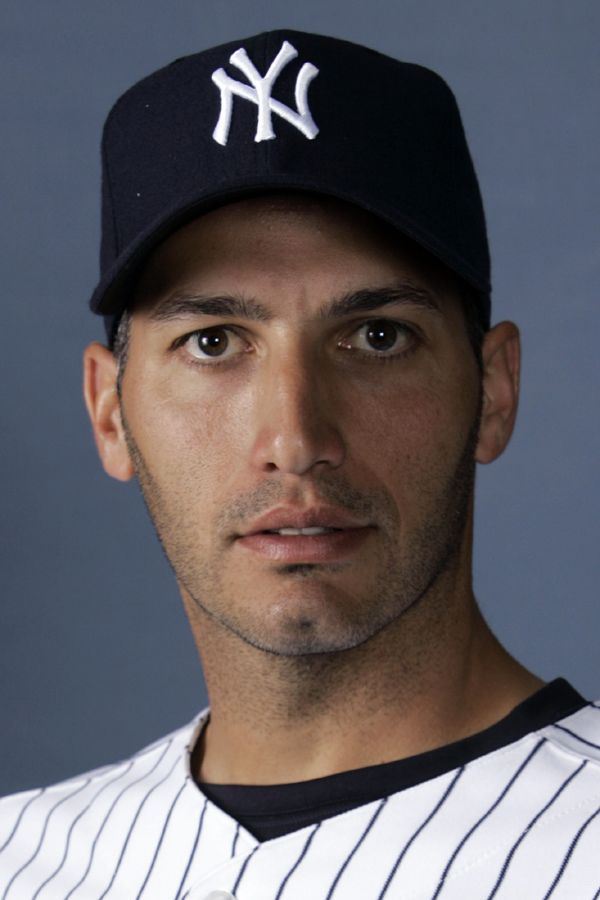
And that’s why Ben no longer has a baseball autographed by Andy Pettitte in his rookie year.

Today, 18 years later, Andy Pettitte announced his retirement.

My friend Zach swears he’s a future Hall of Famer. I don’t agree, but I’ll concede he comes close.

And Ben has no autographed baseball.

Sorry, son. My fault.

— 30 —

The day I made a 14-year-old kid the happiest Jew in New York

Pull up a chair, kids, and I’ll tell you all about the day I made a 14-year-old stranger the happiest Jewish boy in New York.

Today is Yom Kippur, the Jewish Day of Atonement, and it brings back memories of something that happened back in 1973 or so, when I was a kid on the sports desk of the New York Post.

The Post was a very different newspaper back then, a few years before Murdoch bought it and turned the steering wheel hard to the right. It was a leftist newspaper, owned by a woman named Dorothy Schiff, and it was very much the favored tabloid of New York’s liberal Jewish population. The popular joke was that on the day the world ended, The Post’s wood would read:

WORLD ENDS
Jews suffer most

The sports department had a list of bylines that was not only awe-inspiring, but coincidentally upheld the reputation. Ike Gellis. Sid Friedlander. Milton Gross. Maury Allen. Vic Ziegel. Paul Zimmerman. Larry Merchant. Leonard Lewin. Leonard Cohen. Gene Roswell. Dick Klayman.

Need a minyan? Call Post Sports.

And that clearly was what the woman on the other end of the line had in mind when the phone rang in the office late one afternoon, a few days before Rosh Hashanah or Yom Kippur. (I don’t remember which, but the rules are generally the same. A “good” Jew puts on a tie and jacket and goes to shul.)

It was late afternoon, and I was all alone in the office. Ike, Sid, Jack, Dick, Bob and Jerry had all gone home. My job, as the kid, was to stick around until the last race at Aqueduct was over, edit the wire report and take it to the composing room. First one in, last one out. What a job!

The phone rang. What follows is pretty much how it went down.

Me: Post Sports.

Her: Are you Jewish?

Me: Ummmm . . . What was that? (WTF???)

Her: Are you Jewish?

Me: Ummmmm, OK, what the hell. Yes. (I expect to be hanging up the phone in a couple of seconds.)

Her: You’re Jewish.

Me: Yes. (Here it comes.)

Her: Great. We’re having a problem and we need you to solve it.

Me: OK. (WTF???)

Her: We have a 14-year-old son and he wants to go to Forest Hills (where they played the U.S. Open back then, before they built the tennis complex at Flushing Meadows) on Friday. But it’s Rosh Hashanah (or Yom Kippur, I don’t remember) and his father and I say he belongs in temple. But he says he doesn’t want to go to temple, he wants to go see the tennis. We need a referee. We’ve agreed to let you make the decision.

(This woman is an idiot.)

Now, I’m sure her son read the New York Post sports pages religiously (ahem), and that she figured she was being a really cool mom letting someone in the sports department make this monumental decision, and that since the sports department had a gazillion Jews, the Jewish person on the phone would make the “right” decision, and her son would do what the guy in the sports department said.

But the Jew she got was me.

Me: Let me get this straight. You want me to decide whether your kid goes to Forest Hills or to shul on Friday?

Her: Yes.

Me: (Lady, you’re crazy.) OK. First of all, I need to make something very clear. I am speaking for me, not for the management of The New York Post or the sports department of The New York Post. In no way does my decision represent that of anyone other than myself. Is that understood?

Her: Yes.

Me: OK. Here’s my answer. You can force your son to go to shul, but you can’t force him to want to be there, and he’ll most definitely resent it, because he wants to go to Forest Hills. My decision is that HE’S OLD ENOUGH TO MAKE UP HIS OWN MIND about these things. I hope he enjoys the tennis.

That poor woman. She got the wrong Jew.

— 30 —

Buffalo, Wyoming, at 2 in the morning on a Saturday night

Image

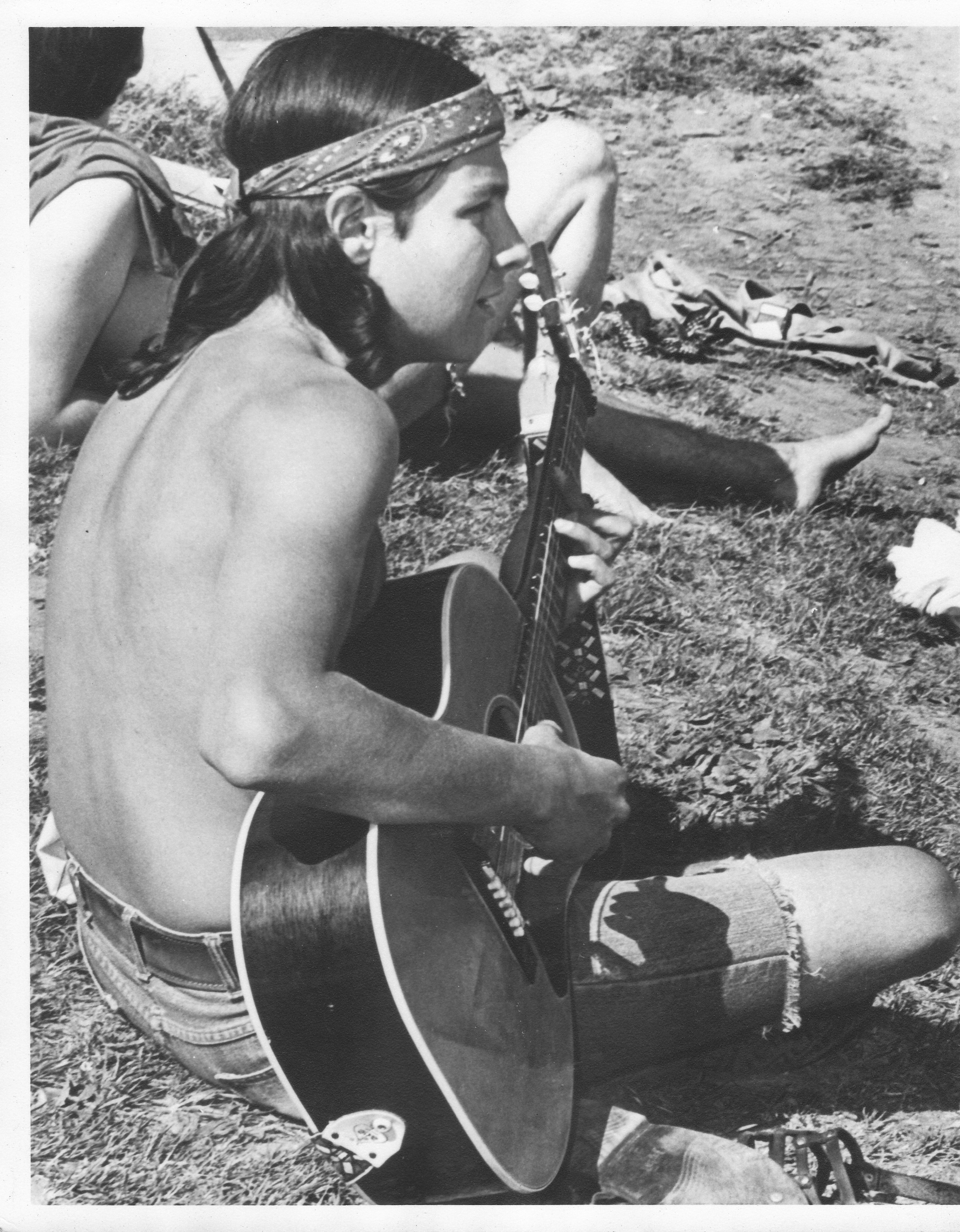
That’s me, in the spring of 1971, back when I could grow hair on my head and not on my face, about two months and another inch of hair before Hank, Jan, Kenny, Mike and I embarked on our Kerouacian trip across America.

(Because we always give credit where credit’s due, we pause to note that the photo was shot, unbeknownst to me, on the Quad at Hobart College by a William Smith freshman named Karen Platt, who one year later would take me up in a two-seat Cessna and perform several maneuvers designed to make me throw up, her way of saying thank you for being very demanding of her in the offices of our college newspaper, The Herald, of which I was editor-in-chief.) (And, thinking back on it now . . . What kind of idiot climbs into a small plane and goes on an aerial joyride with a 19-year-old novice pilot? My god, I did some really stupid stuff in college.)

But I digress. Let’s return to the photo . . .

Note that I’m playing an A-7th, capoed up a fret. That’s me, kids, playing 12-bar blues, the music of my soul.

Also note the cutoff jeans, which went in the laundry every few weeks.

But most importantly, note the Tonto headband, which almost got me killed at a truckstop in Buffalo, Wyoming, at 2 in the morning on a Saturday night.

Pull up a chair, kids, and I’ll tell you all about my night in Buffalo, and my encounter with an 8-foot-tall hulk of a man who, for a brief moment, had me certain that my life was going to end at the tender age of 20.

It’s a Saturday in late July or early August, and Mike has gotten up ridiculously early in the morning in New York to fly to Rapid City, South Dakota, where he will join what just the day before became a four-man, two-car caravan, a story we’ll explain on another day. Mike is fairly exhausted when we meet him at the airport, so, naturally, we toss his three-man tent onto the roof rack of my 1970 Ford Maverick, color Thanks Vermillion, and, along with Kenny’s blue Mercury Cougar, begin a 517-mile trip westward. Destination: Yellowstone Park, with a brief detour to see Devil’s Tower.

 Image

Our route should take about nine hours, according to Google Maps (which, of course, doesn’t exist yet), plus a couple of hours to walk the two-and-a-half miles or so around Devil’s Tower. But we expect it to take even less than that, because we’re college guys and we know that speed limits, like the “Don’t Walk” signs in New York, are mere guidelines, not laws. They are meant to be exceeded. Or flat-out disobeyed. We figure we’ll be traveling at 100 mph, or thereabouts.

But we soon discover that the Ford Maverick, color Thanks Vermillion, with a three-gear column shift and packed with three people and lots of heavy camping gear, and 105 horses of power under the hood, simply can’t go uphill in third. And uphill pretty much describes the entire trip from Rapid City to Yellowstone.

So the next thing we know, we’re doing most of the trip at 33 mph, with the engine revving in second. And we have to stop to let a herd of buffalo cross the road in the Black Hills. And then Hank’s suitcase will go flying off the roof rack of the Ford Maverick, color Thanks Vermillion, somewhere along a two-lane highway in the dark, and we won’t discover it’s missing until the sun comes up, and we’ll have to go back a hundred miles or so looking for it, and that’s why a nine-hour trip will last more than 24 hours, an arduous adventure for all of us, but especially Mike, who woke up in Brooklyn, New York.

Which just goes to explain why, instead of driving THROUGH Buffalo, Wyoming, at around 6 p.m. on a Saturday night, we found ourselves stopping at 2 in the morning for some sustenance — and lots of coffee.

Now, for all I know, Buffalo, Wyoming, is a chic town these days with a multiplex theater, a Starbucks and a Banana Republic.

But that most definitely was not the case at 2 in the morning on a Saturday night in 1971, when it had a couple of stoplights, a truckstop restaurant and a serious dearth of long-haired college kids from the Northeast.

Buffalo did, however, offer a wide variety of enjoyable activities and diversions for the local population, the most popular of which appeared to be whiskey and beer. And it quickly became apparent that everyone in town was partaking in those activities and diversions.

And so it was that when Mike, Kenny, Hank, Jan and I stepped out of our cars, we immediately increased the number of sober people in Buffalo, Wyoming, at 2 in the morning on a Saturday night from zero to five.

We walked into the truckstop, found a table and sat down.

And every bloodshot eye in the place was trained right on us.

The waitress, a dyed redhead straight out of Rosie’s Diner, came over and asked, “One check or separate checks?”

She then added: “You better say one check.”

We said one check.

And then we ordered whatever she ordered us to order, because everyone in the truckstop was staring at us and this clearly was not a good time to request whole wheat or say hold the mayo.

Rosie walked off with our orders, and we sat there, quietly, staying as inconspicuous as five long-haired, grubby Northeast college kids can in a truckstop full of cowboys and Indians in Buffalo, Wyoming, at 2 in the morning on a Saturday night.

And that’s when the giant came around to pour our coffee.

We didn’t see many Native Americans — we called them American Indians back then — in New York, but there sure were a lot of them in this truckstop. In fact, pretty much everyone who wasn’t a cowboy was an Indian, and the most noticeable one of them was the giant pouring coffee. He was roughly 8 feet tall, and he was weaving unsteadily. He’d clearly been partaking in Buffalo’s favorite pastime, though I was not about to ask whether it had been rye or bourbon, Bud or Coors. It sure as hell wasn’t Tab.

He staggered over to our table and poured our coffee, and when he poured mine, he bent way, way down, and in a very deep and loud voice, for everyone in the joint to hear, he asked . . .

“What’s the headband for, son?” (At least he didn’t inquire about my cutoff jeans.)

A lot of thoughts ran quickly through my mind. How, I wondered, would my parents bring my coffin back from Buffalo? Who would drive my car back to New York? Would this be fast or slow?

“Ummmmm,” I replied meekly, “it keeps the hair out of my eyes.”

At least I think that’s what I said, because, really, I couldn’t hear my own voice.

The giant snorted, harumphed, and said loudly, for everyone to hear . . .

“Keeps the hair out of his eyes.”

And then he staggered off to another table.

We scarfed down our burgers and sandwiches and left a very big tip on our single check and got the hell out of there.

But on the way back to our cars, we encountered three women who also had clearly been partaking in Buffalo’s favorite recreational activity, and whose pickup wouldn’t start because their battery had gone dead. So the five of us, being real Northeast gentlemen and all that, offered instructions on how to jumpstart a vehicle, got in back and pushed, and the exhaust sputtered and off they went, waving and shouting to no one in particular.

And then off we went, remarkably unscathed.

I owe my life to an 8-foot-tall Native American, who had the kindness and grace not to tear me limb from limb for wearing a Tonto headband in a truckstop in Buffalo, Wyoming, at 2 in the morning on a Saturday night.

It’s a nice place to visit.

— 30 —